Thursday, June 22, 2023

Culturally Responsive Teach Out Reflection

 Culturally Responsive Teach Out Reflection 
How to Create Culturally Responsive Classrooms
For this Teach Out Project we decided to look into the culturally responsive teaching pedagogy. We currently work in the Central Falls School District. Our student population is composed of 52% Hispanic, 18% Black or African American, 17% white, and 10% American Indian students*. Our educator population is composed of 15% Hispanic, 4% Black or African American, and 81% white teachers*. We feel that the disparity between our student population and educator population can, and does, create a lack of true engagement and success academically and socially within our schools. For this reason we feel it is important to create a presentation for our faculty and staff that addresses Culturally Responsive Teaching and how to implement it within all classrooms/curriculums. As a district we are looking at doing diversity training and we feel this would be a good way to teach how to put these PDs into action. We want to be intentional about creating real-life examples/lessons that our faculty can try out in their own classrooms. We hope that by focussing on the way to better support our students, we can break past the defensiveness that we have seen in PDs in the past. How to Create Culturally Responsive Classrooms

Through this course we have been exposed to some really important readings that deal with various issues like Special Education, MLLs, LGTBQ+, and colorblindness.  What really spoke to us, beyond all the issues being important, is the culturally responsive teaching.  Culturally responsive teaching would benefit all students in these various groups, and would really help our students at Calcutt Middle School be more engaged in learning.  After reading Delpit, it seemed like a great idea to create a PD to help teachers tackle culturally responsive teaching in their classrooms, a lesson at a time.  Not only did I feel like it was important, but based on the RI Survey Works results for SY22 students stated that they felt unsafe and unconnected to our school and in the classroom.  Kate and I realized that it would be beneficial to other educators to have support in creating lessons that will be culturally responsive and inclusive.  

In 2020 and later 2021, during the pandemic, our district decided to respond to the police brutality and racial divide of our country by introducing PD sessions called “Diversity Talks”.  Kate and I have both discussed how uncomfortable these conversations were, especially since they were all virtual and people can get very comfortable with being faceless voices.  A few interactions left me wondering why the message was not clear enough, and also why were people so defensive?  I know self reflection can be difficult, admitting that we have biases and prejudices can be difficult, but it felt like I was in the middle of a Facebook or Twitter fight that I really did not want to participate in.

During this class we were introduced to Lisa Delpit.  In the article, The Silenced Dialogue by Lisa Delpit, five aspects of power are outlined and discussed in terms of privilege within the United States. Delpit argues that students must be explicitly taught "formal conventions,” as well as when it is appropriate to use this language, AND should be able to practice their own linguistics. She argues that in order to both celebrate our students' diverse backgrounds and cultures, and to prepare our students for success in a white-dominant America, we should directly instruct our students about when and where it is best to use the two different linguistic styles. She also mentions that this change must be initiated by the people in power in order to support real change in our society. This article connects to culturally responsive teaching practices because it calls for educators to celebrate our student’s diversities while also teaching them how to succeed in the current social scheme. Delpit also directly addresses how cultural differences, such as what dictates authority, can create misunderstandings and frustrations for teachers and students alike. While many teachers of middle-class cultures may assume they have authority because they hold the title of teacher, students from different cultural backgrounds may expect the authority to be earned. These varying beliefs can cause tension within the classroom and typically lead to over disciplining students of color. Delpit’s voice really helped us figure out what would be a great teach out lesson for our faculty.

PPT - “The Silenced Dialogue: Power and Pedagogy in Educating Other  People's Children” PowerPoint Presentation - ID:191231

Another classmate posted an article by Enid Lee.  In the article, Taking Multicultural, Anti-Racist Education Seriously by Enid Lee, the topic of multicultural education is defined and explored. The article states that multicultural education, “equips students, parents, and teachers with the tools needed to combat racism and ethnic discrimination, and to find ways to build a society that includes all people on an equal footing” (Lee). Lee shares that multicultural education and curriculum must directly address discrimination and cultures in order to promote change towards equity. The article explores different stages to move towards a true anti-racist education. The first is to make surface changes, such as signs in multiple languages. The second stage is to create units of study that explore discrimination and different cultures. Although this state only incorporates cultural diversity in small pockets, it is a stepping stone to the next stage. The third stage is to make structural changes that allow for multiculturalism to be discussed in all of the current curricular units. This is meant to be intertwined with the units throughout the school year and not just one week or month of instruction. The final stage is coined the social stage. This final stage is where changes can start occurring outside of the classroom. The hope is that students, and educators, will use their knowledge of the inequities that have occurred, and still do occur, in our country and go enact change within their communities. This could look like a letter-writing campaign to media companies for example. Overall, Enid Lee explains that multicultural education is the pathway towards acknowledging the systems of oppression that are held within the United States and in turn changing these systems.

Based on these two articles we really wanted to see if we could create a PD that would help our faculty become more comfortable and familiar with responsive teaching in daily lessons. We want to support teacher growth, and feel that as teachers in the same school we can help support through our knowledge of the various curriculum.  As Deborah A. Harmon pointed out in Culturally Responsive Teaching Through a Historical Lens: Will History Repeat Itself? “In 1989, Irvine wrote about the lack of cultural synchronization between teachers and African American students and the negative impact on academic achievement Eleven years later, she described culturally responsive teaching as student-centered, having the power to transform the curriculum, fostering critical problem solving, and focusing on building relationships with students, families, and communities (Irvine & Armento, 2001). Irvine (2002) further explained that the curriculum is transformed with culturally responsive teaching because the subject matter is viewed from multiple perspectives, including the lens of oppressed and disenfranchised groups.”  We want our teachers to realize that this isn’t about creating new lessons or having to fit culturally responsive teaching in every minute of every lesson.  We want to encourage teachers to start small and work their way up as they learn more, much like we did during this class.


Saturday, June 17, 2023

Theory into Practice - FINAL BLOG! (assignment B)

 Teaching at the Intersections

by Monita Bell

5 Tips for Being an Ally

by @chescaleigh on Youtube

In the online article Teaching at the Intersections by Monita Bell, the key idea of intersectionality is explored. The article defines intersectionality as, "the social, economic and political ways in which identity-based systems of oppression and privilege connect, overlap and influence one another." (Bell) This concept is critical for movement towards equity within education, as many of our students are not only limited in one area systemically, but multiple. For example, an African American female student living in poverty does not only face systemic discrimination for her race, but also for her gender, and for her socioeconomic status. The article goes on to encourage educators to not only understand intersectionality but to explicitly address it with their students. Bell says, "By emphasizing intersectionality, she equips her students with the skills to examine why they believe what they believe, why their beliefs might differ from others’ and to determine how their beliefs might be influenced by power and privilege." This reminds me of the article Privilege, Power, and Difference by Johnson, where he calls for an acknowledgement of the two-sided coin of privilege and discrimination. Bell's call for action is for educators to directly talk about how power and privilege is prevalent in our society and how those with power can be the catalysts for change. 

The idea of intersectionality really envelops all of the work we have done this semester. We know that one individual person may have some identities of privilege and some identities that can result in discrimination. We are all complex humans with different identities that make us, us. (Shoutout to Johnson's Diversity Wheel in his article Privilege, Power, and Difference for a great visual of the complexity of our identities!) To best support our students success, not only academically but socially as well, educators must address power and privilege. We must have a deep understanding that stereotypes are bogus and that everyone is so unique (and beautiful) in their identities. We must learn to celebrate our students for who they are, not who society thinks they "should" be. Finally we MUST lead by example and show our students that we not only call ourselves allies but we put the work in to fight for what is right, and what is right is a society where everyone can be successful and happy. 
How to be an ally at work | Blue at Work from Wellmark
Throughout the video 5 Tips for Being an Ally by @chescaleigh, different steps for being an active part of the solution around inequality is discussed. The speaker recommends five different things for people to do in order to be a true ally in the fight against discrimination in the United States. The five steps are titled: Understand your privilege, Listen and do your homework, Speak up not over, Stay in your lane, and Ally is a verb. I appreciated the speakers discussion around the word privilege. As we have discussed in class, and have read through multiple works this semester, many people have an issue with the word privilege and refuse to acknowledge its existence within society. Without using the words, as Johnson mentioned in his article Privilege, Power, and Difference, we cannot begin the necessary change towards an equitable society. We must acknowledge that certain members of our community do not have to worry about discrimination in the same ways as other community members. The last step named Ally is a Verb also stood out to me. We must not simply state that we are an ally against discrimination, but instead use our power, privilege, and access to enact real systemic change that will allow all people to be treated decently.
A Fight For Equity (@afightforequity) / Twitter    The Fight for Equality in America Continues |

Wednesday, June 14, 2023

Language and Power - Bilingual Students (assignment B)

Language and Power 

Aria - by Richard Rodriguez

Teaching Multilingual Children- by Virginia Collier

Teaching Bilinguals, Even if You're Not One! - CUNY NYSIEB

Bilingualism Matters – UCR | Center for Ideas and Society
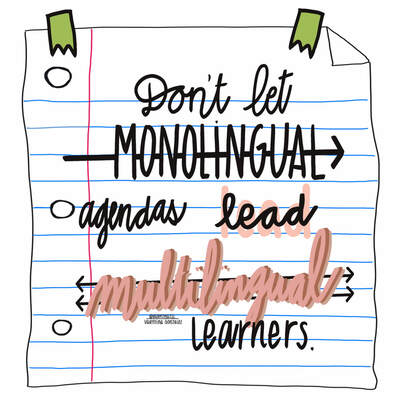
The recurring theme of these articles and videos is the part that language plays in the education of many students. In the article Aria by Richard Rodriguez, Richard speaks about his personal experience as a child learning English as a second language. This article brings to light the harm that a monolingual- English educational approach can have on a persons identity. Rodriguez proposes that one individual cannot have both confidence in their home language and culture while being successful in the public language and culture (English) within our current society. He says, "They do not realize that while one suffers a diminished sense of private individuality by becoming assimilated into public society, such assimilation makes possible the achievement of public individuality." (Rodriguez, 39) The idea that any human has to give up their personal/private identities to be able to succeed in our society is terrible and disheartening.

Up until the recent past students and teachers were expected to speak English only in schools. This created a separation between students and their families, as well as a loss of identity and culture in some cases. In Virginia Collier's article Teaching Multilingual Children, the importance of honoring a student's home language is discussed. When addressing how culturally responsive teaching can improve our educational system Collier says, "the key is the true appreciation of the different linguistic and cultural values that students bring to the classroom." (Collier, page 223) This statement reminds me of Lisa Delpit's article The Silenced Dialogue, where she speaks about the problems that can occur when educators are not understanding or knowledgable of the diversities of their students. Colliers article also addresses language acquisition and the difference between social language vs. academic language. Some educators have the idea that students will "sink of swim" if we throw them into a class of English speaking peers and that language acquisition will occur within a year. This is far from the truth. We must address both social linguistics (such as conversational English) and academic linguistics (content jargon and vocabulary) in different ways. One quote that stuck out to me was, "People untrained in linguistics, particularly politicians, tend to believe that if limited English proficient students can converse with their monolingual English-speaking peers, then these English-language learners can compete with them on equal footing." (Collier, page 225) This statement reminds me of the state testing conversations I have had with other educators, administration and even RIDE. Our MLL students are not given a true chance to show their knowledge with tests that are designed for monolingual English-speakers. Districts that have higher percentages of MLLs typically do not perform as well on the state testing, not because our students are not as "smart", but because our state leaves our MLLs out of the evaluation planning and creation.
MultilingualLearners - Serving Multilingual Learners of All Ages
In addition to these two articles, the series Teaching Multilingual Learners- Even if You're Not One! by CUNY-NYS explores how educators can better support their growing MLL populations within their classrooms. In episode 1 of the series the presenter, Sarah Vogel, says that translanguaging is the key to success for our MLLs. Translanguaging is the idea of utilizing ALL of our students linguistic abilities to promote learning of both academia and the English language. Episode 2 of the same series explores the importance of being an advocate for our bilingual, or multilingual, students. While touring an elementary school in Bedford Hills, New York, Sarah Vogel asks different teachers about their experiences with teaching MLLs. During one interview the teacher says, "Having different languages is only going to help them. It is only going to let them go further."(Teaching Multilingual Learners, episode 2) I love this asset-based perspective! We need more educators to look at being multilingual as an advantage and a beautiful gift. When we encourage our students to speak (and read/write) in more than just English, we are validating that other languages are just as powerful/important. 

In conclusion, all educators should be trained and/or exposed to linguistics and how to best support our multilingual learners. We must lift up our students for being able to speak not only in their home languages but also acquiring English. When we encourage all of our students to use more than English, we are showing them that it is okay to be themselves and that they do not need to change a large part of their identities to be successful in the game of school.


Sunday, June 11, 2023

Teach Out- Article Summaries

 1. The Silenced Dialogue: Power and Pedagogy in Educating Other People's Children

By Lisa D. Delpit

In the article, The Silenced Dialogue by Lisa Delpit, five aspects of power are outlined and discussed in terms of privilege within the United States. Delpit argues that students must be explicitly taught "formal conventions,” as well as when it is appropriate to use this language, AND should be able to practice their own linguistics. She argues that in order to both celebrate our students' diverse backgrounds and cultures, and to prepare our students for success in a white-dominant America, we should directly instruct our students about when and where it is best to use the two differing linguistic styles. She also mentions that this change must be initiated by the people in power in order to support real change in our society. This article connects to culturally responsive teaching practices because it calls for educators to celebrate our student’s diversities while also teaching them how to succeed in the current social scheme. Delpit also directly addresses how cultural differences, such as what dictates authority, can create misunderstandings and frustrations for teachers and students alike. While many teachers of middle-class cultures may assume they have authority because they hold the title of teacher, students from different cultural backgrounds may expect the authority to be earned. These varying beliefs can cause tension within the classroom and typically lead to over disciplining students of color. 


2. Taking Multicultural, Anti-Racist Education Seriously 

By Enid Lee, interviewed by Barbara Miner


In the article, Taking Multicultural, Anti-Racist Education Seriously by Enid Lee, the topic of multicultural education is defined and explored. The article states that multicultural education, “equips students, parents, and teachers with the tools needed to combat racism and ethnic discrimination, and to find ways to build a society that includes all people on an equal footing” (Lee). Lee shares that multicultural education and curriculum must directly address discrimination and cultures in order to promote change towards equity. The article explores different stages to move towards a true anti-racist education. The first is to make surface changes, such as signs in multiple languages. The second stage is to create units of study that explore discrimination and different cultures. Although this state only incorporates cultural diversity in small pockets, it is a stepping stone to the next stage. The third stage is to make structural changes that allow for multiculturalism to be discussed in all of the current curricular units. This is meant to be intertwined with the units throughout the school year and not just one week or month of instruction. The final stage is coined the social stage. This final stage is where changes can start occurring outside of the classroom. The hope is that students, and educators, will use their knowledge of the inequities that have occurred, and still do occur, in our country and go enact change within their communities. This could look like a letter-writing campaign to media companies for example. Overall, Enid Lee explains that multicultural education is the pathway towards acknowledging the systems of oppression that are held within the United States and in turn changing these systems.


Saturday, June 10, 2023

Going to School Documentary (Assignment A)

 Going to School - Ir a la Escuela

Richard Cohen Films

Three Talking Points

  1.  "Before the Individuals with Disabilities Education Act (IDEA 1975) was passed millions of children received inadequate special education services and at least one million children were prevented from attending altogether."
This statement was shocking at first. I had not realized that IDEA was not passed by congress until 1975, ensuring families that students with disabilities would receive a high quality and adequate education within the United States. As I began to think about this timeline I realized that my mom was in school before 1975 and how this legislation is really only one to two generations removed from the current students in our schools. This documentary was insightful and helped bring insight into the services we need to provide to help all children be honored, respected, and provided for.

2. "Yes they are accepting our kids, but they are putting them in a bungalow within the schools. What are we doing?"

This is something that I feel still occurs within our schools. Although we are mandated to have our children in the "least restrictive environment" we still separate our students with disabilities. To have a classroom or hallways dedicated just for students with disabilities is not how we should be immersing our students into the student body. We have gotten better about creating inclusive classrooms in many districts, but some districts still hold the old school model of having students with disabilities separated from their peers all day long. This does not allow for our students with disabilities to be able to grow their social skills, have peer models in academics, or feel as part of the school.

3. I found that an overarching theme among the parents conversations within this documentary was that there was always a push to seclude the children with disabilities. At the time of this documentary the teachers, administrators, and other faculty felt that it would just be 'easier' to send the students to an isolated school for students with disabilities. This to me seems as though they were just looking at the disability and not as though these are still children. It does not serve our students to segregate them based off of any factors, and especially in the case of students with disabilities. It is important for all kids to have peer models academically and peers to socialize with. We do not prepare our children for life after school if we hold them in a separate building or classroom away from everyone else.

Monday, June 5, 2023

Seeing Queerly- RI Laws and Policies & Woke Read Aloud: They, She, He (Blog A)

 Seeing Queerly- RI Laws and Policies & Woke Read Aloud: They, She, He

Woke Read Aloud on Youtube by Woke Kindergarten

Let's Get It Right: Using Correct Pronouns and Names | ADL

Three Talking Points:

1. "Title IX of the Education Amendments of 1972 specifically prohibits discrimination on the basis of sex in any education program that receives federal funding within the Civil Rights Act." (RI Laws and Policies, page 2)
&
This same guidance says we must,  "treat students consistent with their gender identity even if their school record or identification documents indicate a different sex" (RI Laws and Policies, page 2)
&
"School staff members should abide by the student's/parent's wishes concerning how a student would like to be addressed. This would include complying with school policies, as well as state and federal anti-discrimination, harassment and bullying laws and regulations designed to ensure that all students are treated with dignity and respect regardless of any individual's strongly held belief to the contrary" (RI Laws and Policies, page 7)

I feel that all of these quotes are crucial for all public educators to know and follow. This law states that we must treat all of our students with respect and provide them with a fair education regardless of gender. I have heard many teachers blatantly say that they "will not call the student another name". To me this seems close-minded, hurtful and discriminatory. I am happy to know that there is law stating this is unacceptable and I will cite this when I next encounter that statement.

2. In relation to the quotes from talking point 1, "Under no circumstances may students be required to use sex-segregated facilities that are inconsistent with their gender identity. Some students may feel uncomfortable with a transgender students using the same sex-segregated restroom, locker room or changing facility. This discomfort is not a reason to deny access to the transgender student" (RI Laws and Policies, page 9)

I am excited to this this quote in our RI laws and policies! One comment I have heard people make in argument of allowing transgender people to use their rightful restroom is that "others will be uncomfortable." I think we need to address society and the others rather than punishing/discriminating against transgender people. People should not have to worry about where they relieve themselves! We need to create safe places for all genders, all sexualities, and all humans to be able to be HUMANS. 

3. From the Woke Read Aloud: They, She, He Easy as ABC, "Just because people dress or look a certain way on the outside, that doesn't necessarily mean that they feel that way on the inside"(10:40)

This video was easy to understand and used the book to guide the conversation. I especially appreciated Key's humility when they mispronounced Quetzal's name. I feel this video could be used to teach adults about pronouns, as many adults are not understanding/knowledgable on the topic. I think is is SO important to respect people and one way to do this is pronouncing their names correctly and using the correct pronouns. Although we may make mistakes from time to time, if you apologize when you do and keep practicing we can start to make everyone feel valued and seen/heard in terms of gender identity.

Culturally Responsive Teach Out Reflection

  Culturally Responsive Teach Out Reflection  For this Teach Out Project we decided to look into the culturally responsive teaching pedagogy...